I’ve never really understood ‘Church August’. ‘Church January’? ‘Church post-Easter’? Sure: the rhythm of the Christian calendar means that there are points when everyone needs some down time after a burst of particularly intense activity.
But in August, for purely secular reasons, so much comes to a complete halt. School holidays, although in this county the structure of the year has changed so there is not such a long break as there was when I was growing up. Parliament goes into recess, and so does the Church of England. Despite the myth that academics ‘have the summer off’, Church August is far more radical than ‘academic August’ is for a university lecturer, where people have to meet their research deadlines; the admissions processes happen in response to the A-level results; reading lists and so on have to be readied for the new term; and re-sits for the summer exams have to be graded. In the C of E, its national bodies don’t meet, but this year, it hasn’t exactly been a quiet month, with ongoing sexual abuse scandals, fuelled now by the BBC revealing the events at Blackburn Cathedral. The discovery of a six-figure payout there, and the fallout from it, certainly made this a busier August than anyone was expecting. The statements issued – ‘truly sorry’… ‘huge strides’… ‘must learn’ – were the same old, same old.
Locally, in my current church, August always means that the choir is away for the whole month, spending at least a weekend supporting a cathedral with their music because their choir is away too – the knock-on effect of Church August. Of course, the individuals who comprise the choir aren’t away for a whole month, and anyway the demographic is such that they are more likely to be taking actual holidays at a time of year when the children are all back at school and prices fall. Nevertheless, no choir. When I first came to this town, I was also in a Baptist home group, and that stopped for August, but they had the excellent idea of having a merged ‘group of groups’ for that month, recognising that not everyone goes away, and some people very much need and value that contact with others.
But even if people do go away, it isn’t for the whole month. This isn’t France! The tradition of closing down for a month makes sense in an agricultural economy where everyone is needed to help with the harvest, or in an industrial centre in a hot country where a factory needs to shut down so that maintenance on its equipment can happen, or where it is better to close completely than have people doing manual work in very high temperatures. But in a market town in Oxfordshire? In a national church?
Our August shutdown here hasn’t been as dramatic in 2024 as in some previous years. Care home communion continued. Some groups met. There was a special ‘Love Your Church’ service to appreciate the various groups and individuals who keep the show on the road. Under our new vicar, after a long vacancy and with lots on which to make decisions, we even had a meeting of the PCC (a friend commented, surely there’s something in the Bible that says you can’t do that??). Sub-groups put in their reports, the treasurer sent in the accounts, and attendance at that meeting was much as usual.
Nationally, it’s another matter. One of the discoveries made in the ongoing research which the abuse survivor Gilo carried out was that a claim made to him, that William Nye could not have been at a particular reputation-management meeting in August 2016 because he always takes his holiday at that time of year… was false. Maybe he does take his holiday then, but the records clearly showed he was at that meeting. When things are tricky, here as in the Blackburn Cathedral story, maybe the August shutdown doesn’t apply. However, the continued silence about the release of the long-overdue Makin report (1563 days late and counting) suggests that in some cases that such a shutdown is very convenient indeed.
On the positive side, you could argue that closing down so much for August makes it possible for national Christian festivals to happen. We’ve only been to two of these in our time: New Wine and Greenbelt. New Wine wasn’t in August, but happened at the end of July. Greenbelt was last weekend. I don’t do tents and I am insecure without running water and loos, and although the spouse nobly rented a top-notch caravan with its own shower and loo for New Wine, I wasn’t very happy and the stress levels of moving this vehicle out of a muddy field put quite a strain on our relationship! As for Greenbelt, we stayed in a hotel. Yes, I know, that’s a cheat, but do I care? Tomorrow we begin our local not-Christian festival, BunkFest, which sees thousands (I do not exaggerate) of people descending on to the open space behind our house. It marks the end of summer, but it is a wonderful community experience focused on various types of music and dance. Like church, BunkFest has become more family-friendly over the years. Like church, it relies on volunteers and on donations. Unlike church, it doesn’t have to worry about buildings.
And on Monday, it’s September again. The church creaks back into what passes as life, more vibrant in some places than others. Courses start up, taking their cue from the academic year beginning again, dioceses offer training, and so on. Buffeted between the patterns of the parliamentary year and the academic year, is it any wonder that the structure of the Christian year – still in Trinity season until the end of October, but with Creationtide starting on 1 September – is not always understood by those in the C of E?
What does all this mean for the ongoing implementation of Living in Love and Faith? July Synod seems a long time ago now, but the Faith and Order Commission is writing various documents for the bishops, with the intention being that decisions on stand-alone services will come to February Synod (there isn’t a November Synod this year, I suppose because the work from FAOC couldn’t be done in time for the bishops to meet and discuss it before such a meeting). The Programme Board will meet in September and will, I understand, have fortnightly meetings thereafter, and I assume we will find out which bishops have been added to the various working groups. That’s some serious fast-tracking, maybe compensating for Church August when, as far as I know, even these working groups didn’t meet, which seems odd when they are supposed to be presenting all sorts of items in February and we know that December will be largely knocked out by ‘it’s Advent’ and the first part of January by ‘we’re recovering after Christmas’.
Other bits of the national C of E will also be starting quickly. The Appointments Committee meets on 2 September, so the people who send out emails to members from Synod Support had to write to us on 14 August to give us notice of this. Ministry Council meets on 9 September and usually sends the papers (a substantial pile of these) just a week before the meeting, so perhaps those will arrive on 2 September too. It’s my birthday so I won’t be getting to them immediately, if that happens. I also have a book being published on 5 September and various activities planned around that; life. It happens, regardless of the Church of England.
And so it goes on; ‘it’ being the reaction in one section of the Church of England to what are called “the faithless LLF proposals”, produced by the “unorthodox” House of Bishops, aka our “compromised leadership”, etc etc. This really does drag on, and it is only too easy to forget that Synod has consistently voted in favour of some movement. Not equal marriage, but some acknowledgement of the faithful relationships of the lesbian and gay couples in our church, relationships acknowledged by the state. While the opposition to using the very bland Prayers of Love and Faith in stand-alone services, and to allowing clergy to enter same-sex civil marriages, comes from various different strands of the Church of England, all the quotes above originate in the conservative evangelical tradition: specifically, the 24 July commissioning “of leaders” service which happened at St Helen’s Bishopsgate.
Let’s backtrack for a moment. That service followed another “commissioning”, this time of the first set of “alternative spiritual overseers” (ASOs) by the Church of England Evangelical Council (CEEC) on 12 July at All Souls Langham Place. The c-word seems to be doing a lot of work here. The 24 July “commissioning of leaders” looked initially like it was part 2 of those events, with the video from St Helen’s Bishopsgate stating, “Yesterday’s commissioning is the second of its kind”. But that’s confusing, because 24 July wasn’t about commissioning ‘overseers’ at all. So, “second of its kind” in the sense of ‘second action by those who believe gay relationships are sin’, rather than ‘second batch of ASOs’?
Perhaps not. Among the riches of YouTube you can find the commissioning service for George Diwakar on 30 August 2023, also held at St Helen’s Bishopsgate. If you have other things to do today, well, you could watch the short intro here. In the full version, the rector of St Helen’s Bishopsgate, William Taylor, talks about “the failure of the leadership in the Church of England”. Recommended for training by the Church of England and trained at Oak Hill, George, we are told, decided to “press pause” on ordination and instead to be “commissioned as a minister of God’s word” to serve at St Helen’s Bishopsgate, under the New City Deanery Chapter. (What’s that? It’s a new thing: 11 clergy from 7 churches in a self-appointed alternative deanery structure set up to “differentiate” these clergy from the bishops in the Church of England who are “decisively departing from the word of God on a matter of salvation”). George talks about losing the sense of security of the C of E pathway but says how much better it is not to worry about having to answer to God for being ordained by somebody “who was turning against God’s word”. The final prayers of the service ask that Bishop Sarah may be given “courage to stand and to come back to your word”. Mutual flourishing, anyone? The vimeo version of this service uses as its key image the kneeling George with various leaders laying hands on him (4 mins 26 seconds in). It does look a lot like an ordination. And we are told that George will be followed by others “waiting in the wings”.
Oak Hill, by the way. Still not within the Durham Common Awards framework, despite more than one Periodic External Review (PER) since 2016 challenging its refusal to join, and despite the message from reviews that this requires “serious and urgent attention”, and so making this college ideally placed to be the theological college of choice for those who want to keep themselves pure from the rest of the Church of England. As an added bonus for those parts of the church uneasy about women in ministry, as the March 2022 PER noted, “Most students are white, male, and educated. Currently there is 1 female ordinand and 15 female students overall (14%)”. But Oak Hill is perhaps not staying as pure as all that; in April 2024 they announced that they were taking the plunge into Common Awards, not least because their validating university, Middlesex, will end its relationship with them at the end of the 2024-25 academic year.
The person who talks us through most of the 24 July video is again William Taylor, who was also listed in the 12 July order of service as someone to be commissioned as an ASO at a later date. There’s no indication that he has been commissioned in between the two services. So he is clearly ‘in’ the ASO-making group; otherwise, one may well wonder whether the two services were being organised by slightly different groups?
Back to that 12 July service at All Souls Langham Place. This was about “commissioning” their own selection of ordained men and women (not many women, just two out of 20 – because, of course, conservative evangelicals are one of the groups in the Church of England which doesn’t agree that women can be ordained). Some are priests, some are bishops. It was a CEEC-run event; not an Alliance-run event, and that is interesting when the Alliance – a broader “informal partnership of leaders from networks within the Church of England” includes the CEEC but also includes traditional Catholics. Maybe not everyone in the Alliance was quite so happy about this “commissioning”.
The commissioned ASOs are an interesting bunch. Mostly retired men, mostly from the South, from Canterbury province rather than York. All White. One of the ‘overseers’ is the Bishop of Ebbsfleet, who is already a ‘flying bishop’, one of those appointed to offer episcopal oversight to those in the C of E who hold the theological conviction that women cannot be priests or bishops. I’m not sure how the role overlap is supposed to work.
Another is Bishop Rod Thomas, an ex-flying bishop, as from 2015 until his retirement in 2022 he was the Bishop of Maidstone. He started out in the Exclusive Plymouth Brethren. He has said he left because of “the destructive effect it has on families”, and it gave him “a lifelong love of the tolerance you find in the Church of England”. Tolerance, eh? We may be defining that differently.
Bishop Rod entered the Church of England via Emmanuel Church, Wimbledon (ECW). That’s, shall I say, an unfortunate link, bearing in mind that the former vicar there, Jonathan Fletcher, is not a model for good safeguarding (the intro to the 12 July order of service made it clear that the ASOs are committed to “working within the Church of England’s safeguarding framework”). Indeed, Fletcher was identified as a model of “gross abuse of power”, to quote the thirtyone:eight report on him issued in 2021. Bishop Rod has stated that he began going to ECW a year before Fletcher arrived – so that would be 1981 – and left in 1991, but stayed part of Fletcher’s ‘preaching group’; he has said that he knew about what Fletcher was doing in 2018 and left the preaching group in the following year. Last month, Fletcher was charged with historical sex offences for the period 1973-1999.
I am not linking Bishop Rod to safeguarding failures; indeed, he offered to resign as Bishop of Maidstone, if Archbishop Justin Welby felt he had acted inappropriately, but the Archbishop declined to accept the resignation. But it is worth pointing out that ECW, where his faith was formed, was a church where what thirtyone:eights called the “celebration of masculine Christianity” was “embedded in the lives of many”, and where “the culture of leadership on a pedestal” meant that abuse was not reported for fear of “the impact on the wider community if behaviours were exposed”.
The conservative evangelical world is a tightly-knit one, where networks overlap and where the same names turn up over decades. When the Fletcher situation was in a particularly difficult phase, in April 2019, Rod Thomas and William Taylor were two of the four ordained ministers who wrote to the regional coordinators of their network to let them know that Fletcher no longer had Permission to Officiate: and the letter mentioned how “Jonathan … continues to be held in great affection by many”. I do wonder what level of abuse it takes before the affection wanes.
Back to the “commissioning”. The order of service suggests it was done by the congregation, who all stretched out their hands to the candidates “as a sign of prayer and commissioning”. In contrast, for the later service on 24 July, there are images of the candidates with selected hands being laid on them, like this one. Looks rather like a confirmation to me? Or maybe an ordination?
In the flurry of statements after the 12 July event, I felt that CEEC was giving us a certain amount of ‘Nothing to see here. Move along’. “Overseer” Bishop Henry Scriven “didn’t see it as massively a big deal”. A similar downplaying came from the ‘LLF bishop’, Bishop Martyn Snow, interviewed on Radio 4; it is just “an alternative support structure”, one of many. The CEEC statement “stressed that the liturgy is neither a service of ordination nor consecration”. Oh that’s all right then…
But come on, this is disingenuous. And it’s not even consistent because, alongside that, there was also the claim that the July 2024 Synod vote on LLF represented “milestone day”. I’m not convinced by that either – surely such a milestone, such a crossing, happened when the Prayers of Love and Faith were formally commended by the bishops in December 2023, or at one of the many – so many – debates on LLF we’ve been through in the last four years? GS2328 – an “overview of the progress made in implementing what was agreed at the February 2023” Synod, debated in November 2023 – was a “watershed for many” according to the CEEC, wording also quoted in the document outlining the background to the service.
How many watersheds can you have? Which milestone is the one that makes the difference? Surely if you believe that all relationships between people of the same sex are sinful, then – getting classical here for a moment – the Rubicon was crossed a while back, not least with the bishops commending the Prayers of Love and Faith to be used in existing services. To me, the July 2024 Synod debate felt more like groundhog day. And the recent statements about both the 12 July service and the one on 24 July make if very clear that they were scheduled to happen whichever way the Synod voted in July; the 24 July video includes Charlie Skrine talking from York General Synod the day after the LLF debate had taken place. “Overseers” had been chosen, venues booked: it was all planned at that point.
Which brings me back to that 24 July service at St Helen’s Bishopsgate. This was not about overseers, but about seven men, described in the publicity as “young”, who were publicly commissioned for church leadership. So it is more like the events of 30 August last year. On the video about the 24 July service, Jon Tuckwell describes them as having been “carefully selected and trained for ministry”. When I first heard that I wondered if the “overseers” (or the selection panel who chose them) were involved. But the more I’ve thought about it, the more I’ve wondered whether these are all men who, like George Diwakar, have been in the selection and training process of the Church of England but have decided not to be continue in that process – perhaps seven of the 78 whose names were behind a letter sent by “Orthodox Ordinands” in October 2023. In that letter, they said they “anticipate[d] fracturing across the Church of England”; well, of course they did, because the plans for ‘fracture’ already existed and the “overseers” official announcement was in early December. This was not a spontaneous fracture.
What sort of church leadership are these seven men entering? The service on 24 July was definitely not an ordination (the video mentions the need, though, to “provide a pathway for full ordination” and “in due course ordination services”, and conveniently the “overseers” include various bishops who could ordain…) and they were commissioned as lay people.
But now it gets confusing. What sort of lay ministry are they in? If it’s Licensed Lay Ministry, there’s a formal process for that which involves your bishop – it isn’t something churches make up as they go along. There’s a formal process of regular ministerial development reviews. There are other types of lay ministry which are authorised rather than licensed but, again, the bishop is part of the process. There are also “Recognised Ministries” where the parish is responsible for the selection, recognition and training, and these need a person as named supervisor, as well as regular reviews.
I’m not the only one confused here. Anglican Futures has listed ten questions about the 24 July service, here. Specifically, the Anglican Futures team raise issues around canon law, and also think that the video about this service misrepresents the position of the CEEC.
If I am right and the selection and training of these first seven men happened, like that of George Diwakar, in mainstream C of E practices, that doesn’t work with the statement on the video that “Another selection panel is being formed for selecting more men and women. St Helen’s will now only send people forward” through this new route. So that’s just one church – a very large one, sure, but just one – opting out of the C of E selection processes? Where will these people be trained? Who will pay for them?
“And women”, eh? What I heard as the rather arch tone used here was also interesting. St Helen’s only has women on the team as Women’s Workers or a Youth Worker or a children’s worker (by the way, George Diwakar is listed as “Associate training”. Not sure what that means). The church has a complementarian theology. Yet the young men commissioned are – according to William Taylor’s video – apparently going to be leading “informal church family meals at which bread is broken and the death of the Lord Jesus is remembered” (not communion services, oh no, what with them being lay not clergy) in the churches that St Helen’s has planted. Do women do this too, I wonder? Or would the women selected for this new sort of ministry only be allowed to work with women and children? What about an all-women “informal church meal”; could women break bread at that? And how do the traditional Catholic members of the Alliance think about this, in terms of sacrament?
So, is there anything to see here, or just a group of like-minded people officially designating some of their friends as people to whom they can go for a pastoral conversation (12 July) and a parish-level event (24 July)?
It’s hard to tell. It could be a damp squib: it could be the initial step that leads to schism, the first stages of a new province (except, of course, that would need parliamentary legislation – it is not a matter of saying ‘Hello, we are a new province’). Will any bishop or archbishop challenge what happened at All Souls Langham Place and at St Helen’s Bishopsgate?
But there’s one more thing I observe here. Those who are involved are also – as far as I know – continuing in the ‘LLF process’. Isn’t that rather odd, when they are very clear that there is no compromise that will ever be acceptable to them? Even after his retirement, Bishop Rod Thomas was a member of the “Next Steps Group”, one of the many different stages of this process – and yet here he is, becoming an ‘overseer’. John Dunnett of CEEC was part of the ‘facilitated group discussions’ in September 2023 (so was I) and he is one of the members of the Pastoral Provision group of the current Working Groups. He has unequivocally called for ‘differentiation’. The Alliance folk at those September meetings insisted on such separation from everyone else, even while the liberal/progressive folk were trying to find ways to make them feel able to stay in the C of E; for example, by being willing to go for an ‘opt-in’ system where parishes have to agree to offer the Prayers of Love and Faith, rather than having it as the norm, which would have put the onus on those who want to opt out. John stated at the end of 2022 that the “level of security that is needed for orthodoxy to flourish permanently within the Church of England” requires either a ‘Third Province’ where liberals can be put, or having “a new province for orthodoxy”. We went through all this Third Province thing over the ministry of women, and it went nowhere.
So is it any wonder that all these discussions go round and round, when they have in them people who are happy not just to be prominently associated with public events that aim at separation, but to host them and speak at them?
July Synod is over. Another long meeting, which was extended by having a separate meeting of the House of Laity before ‘Synod proper’. This time around, we had earlier starts (8.45), shorter meal breaks, and one evening session scheduled to 21.45 with another to 22.00. This meant that it was very difficult to manage to queue, eat, and make it to one of the many fringe meetings scheduled outside the formal business. It felt very rushed and I’m tired. Ironically, one of the debates was around a diocesan synod motion on rest periods for the clergy. Wellbeing; excellent, but could Synod members be treated a little more gently?
The agenda had plenty of legislative business (which is core to what we do) along with debates on topics including the human dignity of disabled children, and food banks/the social security system. As usual, these ‘outward-facing’ debates meant stories could be told, and expertise shared. I’m just not so sure what happens as a result of them. The disabled children debate was harrowing, focused on support for those who have been told their child is likely to be born with disabilities, and for those who need help throughout the child’s life – including when that child grows up. I had to have a session sitting on the steps looking at the lake after some of the pain I heard in that debate.
Safeguarding featured strongly, with a private member’s motion on Soul Survivor; the whole motion ended up being replaced after the words ‘That this Synod…’, with what seemed to me a far less useful call from the Lead Safeguarding Bishop to let the Archbishops’ Council be the body deciding what to do when the report already commissioned by Soul Survivor from Fiona Scolding KC lands in a month or so’s time. Then there was an update on safeguarding independence (basically a holding motion with the detailed analysis of the options for different new bodies delayed until February) and a further motion moving on the legislation for the Redress Scheme.
And then there was Living in Love and Faith. As usual, this featured heavily in Questions. I think we all felt sorry for the current lead LLF bishop, +Martyn Snow, as he answered supplementary question after supplementary question: no you can’t see the legal advice given to the House of Bishops because it wasn’t all written down, it was given orally, you’ve seen everything we could share with you in writing in the papers you have for Monday’s debate, no that’s all there is, as I just said, that’s all there is… and on and on it went. Together on General Synod, which brings together those working for LGBTQIA+ inclusion as well as for all other areas of inclusion, had made the decision not to submit any Questions, both because there’s quite enough else happening on LLF and because the small staff team would be better off spending time on the process and not having to write answers to Questions which are much the same as those at all the earlier meetings of Synod since 2021.
Living in Love and Faith was also the subject of a formal presentation to Synod, with a panel of six members of the various Working Groups telling us what happened at the Leicester meeting, a meeting which some people regard as a real step forward in spending time listening to each other and in coming up with the idea of ‘delegated episcopacy’ as a way forward, but which others regard in rather less optimistic terms. Listening to the presentation, I had the usual sense of LLF déjà vu. I’ve been sitting in rooms and eating breakfast with people with whom I disagree since I did the Diocesan Shared Conversations – and started this blog – in 2015. And here we still are. There was the opportunity for (more!) questions but I didn’t get any sense of new information emerging.
Clearly there was an issue with those at Leicester not recognising the documents that went on to the College of Bishops as being a fair reflection of their work. Leicester was never designed to produce a document for the CoB to consider, though, so it isn’t easy – without having been at either meeting – to know just how/by whom the draft from Leicester was changed before the CoB, which then rejected it so that the version that went on from the CoB to the House of Bishops was closer to the Leicester suggestion. These events were the subject of formal Questions and of the informal questions at the next LLF event: an informal fringe meeting with the current lead LLF bishop +Martyn Snow.
And that wasn’t the end of it, merely the foreplay before the main event, yet another LLF debate on Monday afternoon, with 5 hours allocated. The motion was to support the timetable of what comes to which meeting of Synod (a timetable which extends for several more years), and to ask the House of Bishops to allow ‘standalone’ services using the Prayers of Love and Faith and to oversee more work on the doctrine of marriage – which may eventually lead to clergy being allowed to be in same-sex marriages. The Pastoral Reassurance – that’s the arrangements for those who think any use of the Prayers of Love and Faith with a committed same-sex couple is ‘blessing sin’ – would be reviewed over three years to see just who is asking for this Reassurance and how it’s all going. The paper behind the motion includes a section on what could offer Reassurance – basically, bishops delegating some roles to other bishops who are more acceptable to the conservative evangelicals and others who aren’t happy with any change here. There really wasn’t much direct reference to the details of this paper in the debate.
Unlike previous debates, and contrary to rumours beforehand, this one only generated two amendments. One was about allocating more money to the theological work which is going on between now and February – when it all comes back to Synod again – and the other was a proposal to delete a clause agreeing that the infamous Issues in Human Sexuality – used in selection for ordained and (in some dioceses) also lay ministry – should be replaced by a combination of the Pastoral Guidance, the Bishop’s statement (I wonder if that apostrophe was put in the wrong place on our agenda?) and a Code of Practice for pastoral provision. The first amendment passed easily: the second was rejected. For those wanting to lose that clause, the issue seemed to be that unless Synod saw the three documents named, we wouldn’t know if we wanted to abandon Issues or not. I was very struck afterwards by chatting to a Synod member who said he was born in the year Issues came out – 1991. That’s a seriously old document, with all its dated language about homophiles and its dated assumption that bisexuality is incompatible with fidelity. And, as speakers in the debate pointed out, it was never written to bear the weight which was subsequently placed on it.
I wasn’t called to speak in the debate, but what I wanted to say relates to something the Archbishop of York said at the end of it; “Synod, after what has I think for all of us felt like 18 months of trench warfare on this issue, I just wonder whether the time has come to put down our rifles and could I suggest a little game of football in no man’s land?”
I wanted to read out these phrases: A matter of life and death; Trench warfare; Legislative schism; A hotch-potch kind of schismatic thing; There will be mayhem.
I then intended to point out that none of them was from the current LGBTQIA+ inclusion debate; no, they were all used in Synod’s 1981 debate on women. Because I believe that these other times when we have strongly disagreed are relevant. Those who were called mentioned some; +Sarah mentioned the ordination of women, Revd Brenda Wallace the remarriage in church of divorced people. The are all areas where we have made different sorts of limited pastoral provision, all areas where we live with difference in the interests of the unity of the church. This isn’t new.
In the press release it issued after the debate, the Church of England Evangelical Council called the debate ‘Milestone Day’. Really? Wouldn’t that have been the day at the end of 2023 when the Prayers of Love and Faith were commended for use in existing services? If I’d spoken, I would have commented on the call from the CEEC for a ‘doctrinal firewall’ on the question of LGBTQIA+ inclusion; a sort of theological asbestos. I wanted to remind Synod that – although it took a while to realise this – asbestos is lethal. Its dangerous qualities would affect those of us on both sides of the wall. Do we need more walls? Are walls the best way to show Christ to the world? I believe that Christ came among us to break down walls, not to put more up.
Finally I wanted to make the point that what we have lost in our current discussions seem to be, first, actual gay people and their lives, and second, any sense of joy around what happens when a gay or lesbian person finds love. The ‘love’ has fallen out of Living in Love and Faith. Paraphrasing the Archbishop of Canterbury on why we needed to pass that motion on the human dignity of disabled children, our reluctance to move on damages not only the church, but the society in which we live. When we speak out for justice, the world hears the gospel message. Our beloved lesbian and gay siblings already suffer homophobic attacks and, in some parts of the world, face the death penalty for being themselves.
I continue to believe that the church needs to say a clear ‘yes’ to affirming and celebrating their faithful and committed loving relationships.
Usually when I go to the July Synod I take up the offer of a lift with one of the other Oxford members. It’s useful to chat through the agenda, and just to catch up. But this time we have a House of Laity meeting before ‘Synod proper’ begins so I asked for a room the night before, to make sure I’m there for it. However, the train journey hasn’t exactly been uneventful.
It’s the cross country service, which takes ages but means I don’t need to wrestle my case across London, up and down lots of stairs. But we had an ‘incident’, of which more shortly.
Last night I accepted the invitation to speak at another deanery synod in my diocese on ‘How does General Synod work?’ and felt supported by the members of that synod who assured me of their prayers for the days ahead. This morning, I had a couple of ‘hope it goes well’ messages, one from someone who is nothing to do with the church and the other from a friend at church: ‘Hope you’ll be very conscious of God being with you all the time in the next 5 days’.
Thinking about that, I’ve been gazing at the passing countryside, reflecting on what I saw and what it could say to me about this Synod session. I noticed a very small bridge between two fields separated by a stream: a bridge which isn’t even visible until you are quite close to it. I saw sheep getting on with ‘safely grazing’. I thought again about yesterday, when we had a walk not far from our home, which involved dropping in on a local church where the electoral roll is 8 people, but which operates a mission of hospitality to local walkers, with a loo, tea-making facilities, and home-made cakes. On our journey the train is now passing industrial buildings with no current use. And the clouds are becoming larger, and darker, as we travel north.
Which brings me to the ‘incident’. While we were waiting for our departure from Birmingham, there were suddenly shouts and banging. A man was upset, and kept saying ‘I’ll f***ing annihilate them’. This was at one end of my carriage. There had already been something going on in which a person was ‘detrained’ but the Birmingham transport police had dealt with that. People on our train drew their attention to what was now going on. There was a lot more shouting and clearly some people on the train were very frightened (me, I’m a street pastor, I’ve seen this sort of thing before).
Various police and other rail staff talked to the man. He had a ticket, so they couldn’t remove him for not having one – I got the impression that they’d rather hoped he didn’t, because that would give them grounds to take him off and the train could continue on its way. The ‘discussion’ went on, and on (30 minutes of this). By then, some passengers were – not surprisingly – getting upset about the train connections they’d miss. Several of us were wondering when it would be safe to go to the loo, as the one in the opposite direction has been out of action all journey, but the shouting man was between us and the other loo.
Eventually the train manager – a reassuring and efficient woman – spoke to the man. She led him through to an area where there was luggage and bicycle space and installed him there on his own. His luggage – 5 bags of it – went back and forth during all this. On one of his trips through the train with a bag, he announced that we were all his supporters, that he was ‘Sheffield steel’, and that he was travelling to see his goddaughter.
Now, I know I’m already tired, that this has been a long journey, and that I’m reading too much into this. But still. Does this say anything to the Synod agenda?
We’ve been travelling for a long time on LLF. The various meetings I’ve been at, the documents I’ve read, have done to death that metaphor. Moving forward as one church, the direction of travel, ‘we need to walk this through’, is it the end of the road or the beginning?
On that journey, there is the occasional ‘incident’: there tends to be one speech which is really hurtful. This train incident appeared frightening, but was somehow defused by a calm person, in the course of which we learned something of the shouty man as a person, not as a problem. At the time, I wasn’t sure about her action, but it proved to be correct. Many of us were delayed in getting to the destination to which we were committed, but he made it to the place he needed to be. And we’ll get there soon. Are the letters about LLF issued in recent days similar to this ‘incident’ and can we find a way to stay on the LLF train, together?
For those who don’t have the time or the inclination to read the latest document and the latest motion arising from Living in Love and Faith, which come to Synod in July – both in the 31-pages of GS2358 – here’s my summary and some initial thoughts. Let me say at the outset that I note that both CEEC and the Church Society have come out against GS2358. No surprises there? Well, I had thought that the basic suggestion – delegating some episcopal roles to bishops seen as ‘sound’ – was landing quite well in the conservative evangelical constituency, but of course there are still some who want a complete ‘firewall’ between progressives and conservatives. Conservatives have not moved away from the ‘same-sex relationships, whether committed and faithful or not, are sin and we can’t bless sin’ approach; while we hear a lot at the moment about a change in ‘tone’, that could simply be because some things aren’t being said in the public domain. Interestingly, CEEC are also unhappy because there is no guarantee that the proposed system will be used ‘indefinitely’. They want something ‘permanent’, so GS2358’s message about what is being called ‘a period of discernment’ isn’t going to wash with them.
So, the detail. The latest document is subtitled ‘moving forward as one church’. That suggests that the bishops have ‘heard’ those of us who don’t want to split the church, and who reject the CEEC proposal for two churches separate in everything (except electing people to General Synod, belonging to the pension scheme and having access to church funding). There are some good words: ‘proportionate’ (which sounds right to those of us who see what’s proposed as very tiny indeed, but will be heard differently by those who think this is the end of Christianity in the Church of England); ‘symmetrical’ (an acknowledgement that those progressives in dioceses which are very conservative also have theological convictions which should be respected). There is acknowledgement that Synod has already voted in favour of change; this is ‘building on previous work and decisions taken by the General Synod and the House of Bishops’. Yes indeed, after all the hours of debate of the last few years, we did, indeed, make decisions. I am even more relieved not to be on any of the Working Groups. Their work, the document says, will continue, with extra bishops added in.
The motion being brought in July is all about ‘testing the mind of Synod’ as to whether the approach outlined – and it is only ‘outlined’, with many repetitions of how it needs more work – could ‘enable the implementation of LLF’ (p.4). Odd phrasing, that, without it being clear what ‘LLF’ means here; the book, the resources, the survey on how these were used in parishes, the subsequent motions in General Synod? The document hopes that this can be done in such a way that the chance of a legal challenge under the Ecclesiastical Jurisdiction Measure 1963 (pp.9-10) is reduced. Let me just say there, come on, people, you know someone will feel they have to do this, whatever you do to reduce the chances. The proposals ‘will require constructive and wide engagement as they are developed in detail’ through ‘ongoing engagement and consultation’; there’s ‘a lot of detail still to be worked through’ (p.2).
So what is actually envisaged? Standalone services for Prayers of Love and Faith, with a period of ‘discernment’ for three years (or, depending which bit of the document you read, for ‘at least three years’ (p.6)). During this period there would be annual monitoring of who is using them. That’s not the end of ‘discernment’; there’s a mention of the ‘initial discernment period and beyond’. Diocesan synods are also to be consulted, probably twice, between now and July 2025 (p.14). Those PCCs and priests who want to use the standalone PLF would have to give a theological rationale for their position. It looks like the incumbent decides, but we’ve been told before that good practice would be for the PCC to vote as well.
In the same period of ‘discernment’, there would be ‘specific and defined delegation of episcopal ministry’ in which both sides can ask for a bishop ‘whose ministry in conscience [they] are able to receive’. And there’s some attempt to think about ‘a nationally led regional model’ (p.7) here, rather than a postcode lottery. But is this episcopal ministry ‘extended’ or ‘delegated’? And what do those words really mean, outside Church-speak? We have ‘specific and defined delegation’ (p.2), ‘extended (delegated) episcopal ministry’ (p.6), ’symmetrical extended episcopal ministry’ and ‘extended (delegated) episcopal ministry’ alongside ‘shared/extended episcopal ministry’ (p.18). What is important here, though, is that the ministry remains legally with the diocesan bishop; no flying bishops (as with women’s ministry) here. Like those wanting to use the PLF, those wanting ‘pastoral provision’ from a different bishop would also have to give a rationale, and applications for this provision would be monitored. I am sure that templates will be produced so that nobody actually has to write an essay on ‘why this parish isn’t happy with our confirmation candidates being confirmed by that bishop’.
There is also a proposed Independent Review Panel for those who don’t find all this works. I’m not sure what the running total is for just how much LLF has cost, but it’s proposed that the members of the Review Panel will be paid (unlike the 2014 Declaration Independent Reviewer at present; p.21). There will be an Interim panel first, because the envisaged Independent Panel may need to be set up with legislation – a Canon or a Measure – meaning that it can’t be set up until July 2026 at the earliest (p.21).
And that’s not all. Faith and Order Commission is to be asked to do more work ‘on the nature of doctrine’ (‘How it changes or develops’, p.5). This is because, the document suggests on p.10, while LLF started out as being about sexual ethics, then shifted to be about ecclesiology or liturgy, it is now about how we change doctrine and whether one doctrine (marriage) can be interpreted differently within the church. Well, we manage to interpret doctrine differently in other areas, so that sounds fair enough. How long for this FAOC work to be completed? That’s not clear. We were told at an earlier meeting that four FAOC documents will be arriving a couple of days before the July Synod, so there’s something else to add to the mix. [addendum, July 4th: that didn’t happen as it was thought the documents need more work so they won’t be with us until nearer the February 2025 Synod]
What about clergy in same-sex civil marriages? You’ll recall that the Church of England currently thinks that same-sex civil partnerships are OK for clergy because there isn’t any sex in those, while same-sex marriages are not OK because they must involve sex. I know: it could only happen in the Church of England. When will clergy be allowed to marry their same-sex partners? This is a very real question for many clergy, both those who have lost their licences because they married, and those who are in relationships and want to know what options are open to them. In a church which so values the fidelity and commitment of a marriage, this endless delay is, quite simply, cruel.
The timetable in GS2358 suggests that the decision will be made by the House of Bishops in January 2025 with ‘the fullest possible detail’ on that proposal to be presented to the February 2025 General Synod (p.5). That’s interesting as it suggests this is purely the Bishops’ decision. But don’t hold your breath for February, because from the FAOC work ‘a possible outcome could be a timetable for the removal of restrictions on clergy entering same-sex civil marriages’ (p.11). Another timetable; no more than that. February is described as when ‘progress’ is presented to Synod ‘for implementation at the July meeting’ (p.11). So that’s February 2025 and July 2025 down as yet more painful Synodical work on this. As someone who started work on it in 2017, I see the ten-year anniversary approaching before we get anywhere much.
For me, there are some ‘banging one’s head against the desk’ moments in all this. For example, on p.5 the statement that there’s the need for ‘the nature of our disagreements … still to be more fully understood’ while recognising that ‘different views are held with integrity’. As someone who has had a conservative colleague on Synod tell me to my face that I know perfectly well ‘what the Bible says’ but that I wilfully choose to pretend I don’t: come on, LLF team, get real. As I said at the start of this post, one of the points coming through much more strongly now is the need for arrangements which are ‘symmetrical’, rather than assuming only one ‘side’ has a conscience that needs to be protected. Interestingly, though, I have never heard the ‘progressive’ side ask for its own bishops, its separate confirmation services, or anything like that. I’ve said before that I’m perfectly happy to take communion from anyone ordained in the Church of England, without asking questions about their beliefs on women’s ministry, LGBTQIA+ inclusion, or anything else. I accept that those with whom I disagree hold their views with integrity. But I am less convinced that they feel the same about me. Maybe that’s where the work needs to be done.
I was on Street Pastor duty last night. It was a late one, and my bedtime reading as I wound down in the early hours with some camomile tea was the raft of papers released yesterday ahead of the main information dump for July Synod – I know, that sounds sad, but when else am I going to get on top of them? That was when I found out that my blog post earlier this week was premature, at least in part. I mentioned there the February 2024 Synod Questions 167, on trust and the House of Bishops, and 66 and 67, where we heard of ‘a task and finish group … to explore how the work of the House of Bishops could be more transparent’.
Well, there’s now a result from the various questions that have been posed by me and by others.
GS Misc 1387 is the interim report of the House of Bishops Transparency Group, and references not just those Questions, but two others from February Synod: 173-174. Both of these were asked by people at the more conservative end of the C of E spectrum. One was focused on what the questioner called the ‘misuse of standing orders to keep meetings of the House of Bishops, a house of this publicly accountable Synod, a secret’ while the other asked for the House’s voting figures to be made public. It’s always fun to find areas where those of us who disagree on other things are on the same side. Like Questions 66-67, 173-174 reflect concerns that there is some legal advice on the Living in Love and Faith agenda which is being kept hidden from the rest of us; that view, which typically comes from conservatives, has been expressed in Synod and also at meetings of the House of Laity. My own view on this is that the legal advice you get depends largely on which lawyer you ask. But I’d missed the point that, in his written response to Questions 173-174, the Archbishop of York gave the Terms of Reference of this small group and its membership – rightly involving Andrew Atherstone, whose piece on the House of Bishops I referenced in my earlier blog post. The first ToR concerned improving ‘in particular transparency of the way the House works’. Yes!
There’s a question which this raises for me: February 2024 generated a total of 225 questions taking up 95 pages of text, and that of course is not including the information given in the various supplementary questions, which is found on the YouTube recordings and then in the full transcript. With so much information, how is anyone supposed to join up the dots, read between the lines, and work out what is going on? I find Questions increasingly unhelpful: yet they are the one place where anyone can try to find answers.
I asked in my last blog post whether the Standing Orders of the House of Bishops should be amended so that meeting in private – their usual practice – was given as the norm. And this isn’t just my thought; it’s what is now proposed in GS Misc 1387. As the cover note states, ‘The House will continue to meet without public attendance and will amend its standing orders to be honest that it is doing so, removing the fiction of public participation in Standing Order 13.’ Nice language, that: ‘removing the fiction’. Good to clarify that.
As for publishing full minutes, something else which concerns me, the first recommendation is that these should be made available after the following meeting formally approves them. That could be quite a delay, because officially the House of Bishops only meets in May and December, although there seem to be zoom meetings in between those. The second recommendation is that formal legal advice or advice from the Faith and Order Commission (and other such advice) which goes to the House of Bishops should be issued to General Synod. But, other than the legal advice, ‘Papers to the House of Bishops should continue not to be published’. Both of these recommendations will come into play for an experimental period.
The interim report makes a case for confidentiality – obviously – where personal information is being shared. It also suggests that ‘being vulnerable and having honest private conversations, where [leadership teams] can be present and curious with each other’ is a Good Thing. That makes me wonder about how difficult it is to be honest with each other in the Church of England at the moment. It’s one thing to say that we respect our different theological convictions, but it’s quite another to say what you believe or who you are when you know you are going to attract criticism; and when you are the one without the power, and the person to whom you are speaking has all the power.
There’s also an excellent point made in this report about the risks of ‘key decisions happen[ing] outside the formal processes’. In the Living in Love and Faith process, there are sometimes mentions of meetings that were not announced, and I often wonder just where decisions really are made.
The House of Bishops meetings will generate minutes, not a transcript. There is much detail given in the report about the principles used in writing these Minutes, including the number of pages of Minutes for four meetings dated as 15-17 May, 30 Oct-1 Nov, 9 Oct 2023 and 29 Nov 2023. I am rather confused about that, and about how it relates to the stated norm of meeting in May and December, but assume those are the two normal meetings and two bonus zooms. But the answer to February 2024 Synod’s Question 175 gave a total of nine House of Bishops meetings in 2023. So maybe that statement that ‘The House of Bishops meets in May and December outside of General Synod’ needs updating to clarify just when they meet.
Up until now, we’ve often relied on press releases published by Comms immediately after each meeting. These are so devoid of content that, when they are posted on sites like Thinking Anglicans, they attract no comments whatsoever. The interim report notes that these press releases ‘tend to be bland and factual’. I approve of the honesty of this assessment; that ‘b’ word has been widely used of these short statements. I also liked the very detailed list of the types of paper which go to the House, and the remark that the House may want ‘to have a particularly difficult wrangle over an issue where it wants space to be honest and vulnerable’.
As for the admission of the public, the conclusion is not to do this, but to be honest about that. In considering the possibility, the report goes into welcome detail about the logistics; should meetings all be on Zoom and available to all, but how would that work in the different venues used and would it end up with all meetings having to be in London, which is clearly not the right way to proceed? If there is a physical meeting, how would tickets be allocated, where would people sit, what security would have to be put in place? Would the solution be to allow in some members of the press?
I was interested in the comment that ‘The House of Bishops seeks to be consultative and conversational – that is, not relying on set-piece debates where the result is often pre-determined, but enabling more informal conversations in which bishops are free to share ideas in a safe environment and often to change their minds from the beginning of the meeting to the end.’ What is the contrast being made here? What is the unheard ‘unlike…’? Because I would be very disturbed to be told that Synod has set-piece debates with a pre-determined result, and that nobody there has ever changed their mind!
One other anomaly is addressed – acting diocesan bishops (where a diocese is in vacancy – something which currently applies to one in seven dioceses) attend, may speak, but have not been allowed to vote either at the House of Bishops or at Synod, but changes to legislation will be proposed to allow them to do this. Another good move. Overall, this makes GS Misc 1387 an encouraging document; so long as these changes really are put into place, and so long as they ‘stick’ rather than being abandoned entirely after a trial period. And, in the process of reading the reflections of the working group, we learn a little more about how the House of Bishops functions; one new thing I learned from this interim report is that the Secretary General ‘attends and may speak’ at the House. I wonder what sorts of intervention come from those who are not bishops?
I’ve been silent on this blog for a while. Partly that’s because I haven’t been involved in the three Working Groups which have been meeting to discuss various facets of the ongoing Living in Love and Faith discussions (even though others I would label ‘the usual suspects’ have). And partly it’s because I’ve had a lot of other things to do, not least the planning and last-minute decisions around a book which is going to the printers at the end of this month.
On the task of those Working Groups, I had thought that the Archbishop of York, as chair of the ‘Programme Board’ overseeing the three groups, would have said something, but perhaps he does that behind the scenes. Instead it’s the Bishop of Leicester, the one remaining ‘LLF bishop’, who wrote an article for the Church of England Newspaper on ‘LLF: Unity matters – it really matters’. It’s an odd title; why say it ‘really’ matters, which to me feels like saying ‘this matters’ may sometimes mean it doesn’t really matter? It reminds me of the worship song chorus ‘We really want to thank you Lord/We really want to bless your name’. Why not call the piece simply ‘LLF: Unity really matters’?
In that article Bishop Martyn talks about ‘a remarkable coming together of General Synod members’ in the Leicester residential for all three Groups held over the Eurovision weekend. The list of names of those on the Groups is public and not everyone in them was a General Synod member; but maybe only members went to the residential? He asks ‘how are we going to remain united while also being honest about our differences?’ That isn’t a new question, of course. I’m not a theologian, so I shall leave it to others to say whether they found his reflections on unity in connection with the Trinity, and with the divine and human nature of Jesus, helped with this question. He concludes that we need ‘Three spaces in one Church’, but that there are different views on how firm the boundaries between those spaces should be. I don’t think that’s deliberately a riff on the Trinity, where surely there are no boundaries, but anyway, I am not convinced this makes sense in terms of how most congregations work.
Does any of this give those of us outside the current discussions any sense of what is coming to Synod in July? While I am not involved, I am one of the representatives of different groups who attend ‘stakeholder’ meetings, and more of these were held last month. And as I am on Synod I know the timetable.
So… Synod papers will come out on 19 June. After that, some discussion papers from the Faith and Order Commission will be signed off on 2 or 3 July and sent on to Synod members. Just a little heads-up to those who aren’t on Synod – we meet from 5-9 July, there’s the General Election on 4 July, and there’s a meeting of the House of Laity before Synod starts so some of us need to head up to York early for that. Not much time for reading papers but we’ll do our best. I feel for those who are trying to juggle Synod membership with full-time jobs or with caring responsibilities.
On 12 June the House of Bishops met in person to decide what to bring to Synod. We have a (short) press release. It’s so short that I am reproducing it here:
The bishops heard updates on the developing proposals from the Living in Love and Faith Programme Board and working groups which represent a variety of theological convictions, traditions and views on sexuality and marriage.
Following a wide-ranging debate, the House of Bishops voted clearly in favour of the proposals being explored further and discussed by Synod which meets in York next month.
Earlier in the day the full College of Bishops met and heard directly from members of the LLF working groups who reflected a strong desire from across the range of views to remain together as one church despite differences.
The end of the first sentence is interesting, in terms of the gradations implied. I have a ‘theological conviction’, you have a ‘tradition’, that person over there just has a ‘view’? I know I am clutching at straws here, but with so little to go on, ‘voted clearly’ becomes interesting. I read it as meaning that there was a vote, and it wasn’t close. But we don’t have the figures (unless of course they are leaked, as so much else has been).
I am not sure that this short statement is what we would expect after what we were told in the rather fuller notes issued from the House of Bishops’ previous meeting, in May. There, we were told,
Bishop Martyn Snow expressed his thanks for the constructive, gracious, and generous atmosphere of the recent residential weekend undertaken by the LLF working groups who came together in Leicester. The Bishops encouraged the Programme Team and LLF working groups to continue their work before outlining a more detailed proposal to the College and House of Bishops in June.
So, ‘a more detailed proposal’ for June; yet in the June meeting report, the proposals are plural, there’s nothing about detail, and they are ‘being explored further’. By whom? Where? Don’t know.
The trouble here is that many people who have a strong interest, of whatever kind, in what comes out of the House of Bishops and in what goes to Synod, are left none the wiser by these statements. More generally, there seems to have been a reversion to the very vague style of public pronouncements from House of Bishops meetings. On the Church of England website, the relevant page doesn’t have all the ‘notes’, let alone the ‘summaries of actions and decisions’ from House of Bishops meetings. Reports from earlier House of Bishops meetings are not collected on this page, although they can still be found on the press releases page.
If we go back a little further, the House of Bishops page has decisions from March 2024, but with no voting figures on anything that is described as having been ‘approved’. We read that the Bishop of Leicester ‘set out the process for taking forward the Synod discussions on Living in Love and Faith’; interesting wording, as shouldn’t that be ‘decisions on Living in Love and Faith’? We have made some! In March we were also told there that the House ‘looked forward to further updates and decisions in May’. ‘Decisions’ again? Yet I don’t see any in the report of the May meeting.
Going back still further, the report of the House’s decisions made at the December 2023 meeting, when there was some further kerfuffle before the Prayers of Love and Faith were formally commended, does include some voting figures; but in other areas around LLF we simply have ‘No decisions were taken… No decisions were taken… No decisions were taken other than to agree to a small working group.’
So without leaks, it’s still a mystery what the House of Bishops thinks.
Of course, Living in Love and Faith isn’t the only item on the July Synod agenda. There is also a ‘Report from the Wisdom of Trust Working Group’. This is a rather mysterious group, part of the ‘Transforming Effectiveness Programme’ (does anyone outside the inner circles know what this is?), and many of us heard about it for the first time at the February 2024 Synod in response to Question 167, which was about the lack of public trust in the Church of England. I do wonder if it also relates to the answers to Questions 66 and 67, where we heard of ‘a task and finish group … to explore how the work of the House of Bishops could be more transparent’.
Trust… transparency… like unity, these are topics which matter (indeed, ‘really’ matter). And in all these sets of notes or summaries of their meetings, the Bishops’ first action after agreeing the minutes of their previous meeting remains a discussion of whether or not to invoke Standing Order 14 so that they can meet in private. Noting that ‘Secrecy breeds distrust’, last year Andrew Atherstone published an excellent piece on this, summarising a previous debate in the 1970s on the (lack of) transparency of these meetings. He pointed out that there was a brief period when meetings took place in public, but the use of SO 14 became the norm by 1983. He noted the parallels between the Standing Orders of General Synod and of the House of Bishops; except that Synod never uses its power under Standing Orders to remove the public, while the House of Bishops does so – every single time.
Bishops maintain their secrecy, something which seems very strange when the call for transparency and honesty has never been stronger. They always use SO 14. It can be worded as voting ‘in favour of meeting on this occasion in private’ (my italics). But since they always meet in private, I wonder whether a more honest approach would be to amend the standing orders so that it’s clear that this is the case? I would love to know in what circumstances they would now choose to meet in any other way. Since the location of these meetings is not announced, it hardly seems likely that hordes of church members are clamouring at the door on the off-chance that they will be allowed in. Andrew called for ‘A thorough review of House of Bishops procedures’ because ‘transparency builds trust and trust is at the heart of healthy ecclesial relationships’. I agree, here and everywhere else.
PS A document for July Synod on the House of Bishops came out just after I had written this post, so there is a follow-up to this post here.
Earlier this week there was a surprising announcement from Soul Survivor Watford of their new senior pastor. On X/Twitter, @needs_light tweeted that the person appointed is Simon Nicholls, a former Soul Survivor employee in a range of roles, and a former Soul 61 gap year student. What’s surprising about that? Simply this: that an earlier statement had been clear that they were ‘seeking to recruit somebody from outside of our church so as to bring in fresh perspectives’. Hmm. It’s an odd way of defining ‘outside’. Both the statement and the announcement were screenshot and shared by @needs_light, but neither of them now features on the Soul Survivor Watford website.
None of that is a good look.
I was interested in who Simon Nicholls is, not least because of a very positive comment on X/Twitter from a current member of his congregation, so did a quick search online. It took me only seconds to find the programme from a 2018 Soul Survivor festival on issuu, here. At that point, I lost all interest in Simon Nicholls, because in the brochure I found this on p.73:
WHY IS MIKE SO MEAN TO PEOPLE ON STAGE?
One of Mike’s quirks is that he likes to tease his friends and that means he often makes cheeky remarks about them on stage. Please don’t be offended! Mike’s being affectionate rather than mean; we promise you he only ever teases someone who knows that he loves them.
There’s quite a lot else in the brochure which I found bizarre; for example, the handy section on p.70 on ‘How to pray for physical healing’ which insists that you must address the organ (for an eye problem, ‘Speak to the eye’); tell the pain ‘very firmly to “Stop it,” in Jesus’ name (but remember you don’t need to shout!)’; repeat as necessary ‘as many times as you are both comfortable with’). I am not comfortable with any of this as something to encourage, but maybe I am just in the wrong tradition.
But nothing really beats that paragraph on Mike being ‘so mean’, but being mean is how you show you love someone – if you’re Mike.
In a blog post about celebrity culture in the church published on the Centre for the Study of Bible and Violence site this week, Laya Watters noted how she had ‘dismissed my fears, putting it down to the pantomime comedy and trusting those in power and proximity to hold [Mike Pilavachi] accountable’. Those commenting when I shared the ‘Why is Mike so mean?’ link on X/Twitter also talked about how they had tried to ignore their own reactions to his behaviour, but also noted that the way such behaviour had been presented in Soul Survivor as a model of leadership had affected them in their later experience of churches; the toxicity lingered, distorting their perceptions. Others observed that the presence of this paragraph in the brochure suggested that there must have been complaints – but that those who could have acted on them had chosen instead to sweep them under the carpet. The option of telling him to stop doing it? Was that even considered?
The list of business to be considered at the next meeting of General Synod, in July, at last has this item on its agenda:
The Revd Robert Thompson (London) to move:
‘That this Synod, being deeply disquieted at the continued controversies over the actual independence of Safeguarding structures within the Church of England, does not accept that an internal Church inquiry into the allegations of abuse and cover-up within the Soul Survivor network is either sufficient or right in principle.It accordingly calls upon the Archbishop’s Council to commission, on agreed terms of reference with survivors, a report into those allegations from an independent King’s Counsel without delay.’
I was one of those who signed the motion, moving it up the list of those submitted. It was first available for signatures in September 2023. A year after that, the initial internal inquiry reported, its conclusion being that the safeguarding concerns were ‘substantiated’; Pilavachi’s abusive behaviour was recognised as ‘an embedded pattern’. Since then, Soul Survivor have set up an independent review being led by the excellent Fiona Scolding. Questions remain: when Pilavachi’s behaviour was so well-known that a jolly little dismissal of it was appearing in the festival brochures, why wasn’t it called out earlier?
Augustine Tanner-Ihm and Jonny Masters wrote a powerful piece about the theologies of sexuality that enabled Pilavachi to flourish: you can read it here. Jonny Masters commented at the beginning of this, ‘When I think back and remember laughing at Mike’s insults to other leaders on stage at Soul Survivor my soul curdles a little inside. Was I complicit in long-lasting abusive behaviour?’
Maybe the best place to hide really is in plain sight.
There’s a lot of Stuff swishing around in the Church of England right now. The focus at the moment may be on the composition of the latest groups which have been set up, comprised of people with different views being invited to discuss aspects of implementing Synod’s decisions; for various reasons, including making sure more LGBT people are among the members, public announcement of who is in these groups has been delayed but is now imminent [UPDATE: announced 8 May). But, once again, as someone involved in the Living in Love and Faith project for a very long time, I am reminded that we seem to have forgotten that the resources of this project exist. For example – and very relevant when one of the current questions is about the different ways that standalone services of blessing could happen – how bishops ‘have a particular role in determining the liturgies that can be used in the Church of England’ (LLF book, p.319). That is a useful reminder that, even though ‘Listening to the voice of God is a task for the whole Church’ (LLF book, p.329), it doesn’t really matter who is in which group, when for much of the way forward it’s the bishops who will have to decide.
All this reminds me of the myth of Pandora’s jar; the jar with ‘Do Not Open’ written on it. Pandora opened it, regardless, and out came all the evils of this world; diseases and hard work and suffering. Only Hope remained inside.
When we started the project of writing the resources for Living in Love and Faith, back in 2017, there was a conscious choice made not to offer ways forward at that stage. It was all about helping people to think through some of the issues around relationships, marriage and identity. It was an invitation to examine ourselves (LLF book, p.4) and to open a period of discernment (LLF book, p.424 – the final page) which would lead the Church of England into ‘making whatever decisions are needed for our common life regarding matters of identity, sexuality, relationships and marriage’ (LLF book, p.420). We were keeping the lid on.
Now, however, and particularly in the last year or so of Synod votes and yet more working groups, the lid has come off. Somehow LLF has become a gateway to all the questions which have been around for many years but which we’ve managed to ignore, or at least largely ignore. Perhaps that’s the logical consequence of moving away from the ‘Don’t ask, don’t tell’ culture in which the vicar lived with ‘a lodger’ and everyone looked the other way. But there’s far more going on now, and not just an acknowledgement that openness is better than secrecy.
These questions include not just the ‘presenting’ ones – should there be formal services to bless a couple in a same sex committed relationship, just as there are for straight couples who have had a civil service, and should couples where one or both are clergy be able to have civil marriages – but many, many more: back to the LLF book, what is the role of the bishop? And on it goes. What is the church? On what areas should there be consistency between dioceses? Should clergy be held to different standards from laity? Should the standards applied to clergy also be applied to lay people in leadership roles? What roles count as ‘leadership’? What is the relationship between the church and the world? Who makes decisions in the Church of England? How does the Church of England relate to the Anglican Communion? What does ‘blessing’ mean? What is marriage and is it the same as Holy Matrimony and does that matter? How can someone who thinks any relationship between two people of the same sex is a sin belong to a church where such relationships are honoured? And older questions are being revisited: can people who believe women priests are priests, and people who think that’s impossible, be in the same church? At what point does having ‘two integrities’ become schism?
In the ancient Greek myth, Pandora was explicitly told not to open that jar. But she did anyway, and there are obvious links with some readings of the Eve myth. As so often, it’s all the fault of women… In the analogy I am drawing here, a key difference is that we should have opened this jar properly before, because the questions which have come out are central to our faith and should not have been shut away. And Hope? Does that still remain in the jar? The more delays there are to the process, the more many of us start to lose hope.
And last week it struck me very powerfully how all those questions – everything that jumps out into the world once you take the lid off – are somehow to be carried by those who simply ask the church to bless their committed relationships. So I want to say: this is a heavy load to bear. And it’s being placed on just a few people, who in some cases are people who’ve already been badly damaged by others in the church. This never about ‘issues’; it’s about people.
There used to be bumper stickers with the message, ‘Jesus is coming – look busy!’ Leaving aside the dodginess of that idea – and here I’d mention the Archbishop of York’s counter-argument, Do Nothing to Change Your Life: Discovering What Happens When You Stop– it does look like the Living in Love and Faith (LLF) process is getting very ‘busy’. Last time I blogged here I was speculating about what I assumed was the imminent announcement of the membership of the three ‘not (just) the usual suspects’ groups to which, back in March, members of Synod were invited to offer their time. In fact, it turns out that those groups are still not finalised. At today’s stakeholder meetings we were told that this may happen at the end of next week, which will be after the first meeting of each group.
So yes, that’s why I’m writing: because we’ve had some more stakeholder meetings. This time by zoom – cheaper, and more convenient, especially for those who have the temerity not to live within an hour of London. This time, no bishops present, just those of us representing various inclusive groups, and the two very busy and very helpful staff members of the Living in Love and Faith team.
Why no bishops, I asked in the meeting I attended, bearing in mind that it’s the House of Bishops which has to make the decisions on what to bring to General Synod? Of course the staff will update them, but being in the room with us has a very different vibe. Did any bishops meet with the conservative stakeholders? No idea. For today’s meetings (three that I know about, with inclusive groups) the answer was that today clashed with some meeting of the archbishops with all diocesan bishops. When I was told that, I thought it was weird – surely such a meeting would already be in the diary before this one was fixed? Thinking about it, maybe not. I have no idea whether archbishops and diocesans meet regularly, but it is possible that this is also related to the use of the Prayers of Love and Faith (PLF) and to the question of the place of episcopal conscience, which is something we were told today is being considered by a Faith and Order Commission (FAOC) subgroup. Or then again, maybe it isn’t anything to do with that. As is so often the case, we don’t know and nobody is telling us.
Going back to December, published notes from the House of Bishops – we don’t get those very often! – tell us that they set up ‘a small working group’ to develop ideas around how the bishops could function when they don’t agree what ‘pastoral reassurance/ formal structural pastoral provision’ should look like. Or, to put it in simpler terms, what sort of arrangements would be enough to keep within the fold most of those who don’t think the Church of England should either bless same-sex relationships in ‘stand-alone services’, or allow clergy and lay leaders to be in same-sex civil marriages. That was the only time we’ve heard anything about such a working group. What did it do? Anything?
Now, we are still waiting for information on those three new ‘not (just) the usual suspects’ groups who’ll consider the same questions as usual, but hopefully this time more focused on process. We heard new information today: that the membership of each will include some representative/s from FAOC, and also that the other members won’t just be from Synod. That seems rather odd; why not? All varieties of the Church of England are represented at Synod so why bring in people who are not members? If you are going to do so, then why not have an open call for such people (there wasn’t one)? Ours not to reason why. There was also a suggestion that the full membership of the groups will not be published. Why not?
However, at the same time, as we heard in today’s stakeholder meetings, FAOC is running four of its own groups, around unity and the nature of the Church, what ‘Holy matrimony’ and ‘marriage’ mean (this one has been going round and round for a while now), clergy in same-sex marriages, and the conscience of bishops (this one is about whether some bishops could make their diocese a no-go area). None of those are new questions. FAOC is, to put it politely, not known for its speed. I’m not even sure why some theological questions are put to FAOC and others aren’t, or who decides to call them in. Its members are appointed by the archbishops, but who knows how that works? We were assured that the documents produced by these FAOC groups don’t need to go back to the full committee for approval so there won’t be delays.
What else? The main information-sharing was around the processes envisaged from now until February 2025, when there will be ‘Further discussion on proposal seeking approval of any legislative processes’. The three slides shared had a lot of coloured boxes, and a lot of words. They will soon be shared with us so we can pass them on.* We commented on the procedure here: clearly they weren’t created overnight, so why couldn’t they be shared in advance to give everyone a fair chance of getting their heads around it all? We heard that the new Programme Board only met on Monday so they couldn’t be shared until after that; but hello, it’s Wednesday.
The overall impression from the coloured boxes is of busy-ness; lots of different groups having to complete their part of the process to pass it on to the next group. The word ‘indicative’ features heavily. We know the bishops have been having ‘indicative votes’ at their meetings for a while now, to get a sense of how they divide but without it being binding in any way.
Having seen a fair number of earlier versions of a timetable like this, I am well aware of how easy it is for the timing to slip. Where the current timetable differs from other recent versions is in the incorporation of the FAOC groups; an extra area of possible slippage. FAOC’s involvement was mentioned in the documents we saw in February, although not in the Implementation Plan on a Page, in GS2346, p.20. But things have moved on from these documents in many areas, not least the abandoning of the ‘two Lead Bishops’ model in favour of a team with a single ‘Lead Bishop’.
Let’s just remind ourselves of what is currently on the table: a proposal for stand-alone services of blessing for same-sex couples (it is already possible to have these in an existing service) and ending the refusal to allow people in same-sex marriages to be ordained, or clergy in same-sex marriages to have licences. Those who disagree think that there is some way that the Church of England can be divided so that they feel insulated from all of this, which they consider to be sinful. But how would that work? This is really what the next months are about. The aim, we were told today, is ‘a workable solution with maximal support’.
Next stage? Apparently another set of stakeholder meetings in May, a month which also features a House of Bishops meeting (18 May). In June, a College of Bishops meeting (12 June). And Synod in July. More groups, more votes. I know I’m not alone in feeling very, very tired. But the busy-ness getting to a solution is necessary for everyone within the Church of England, and in particular for those most directly affected.
*addendum: these are now out there in the public domain, with a comment to the effect that things change and so they may not be correct for much longer

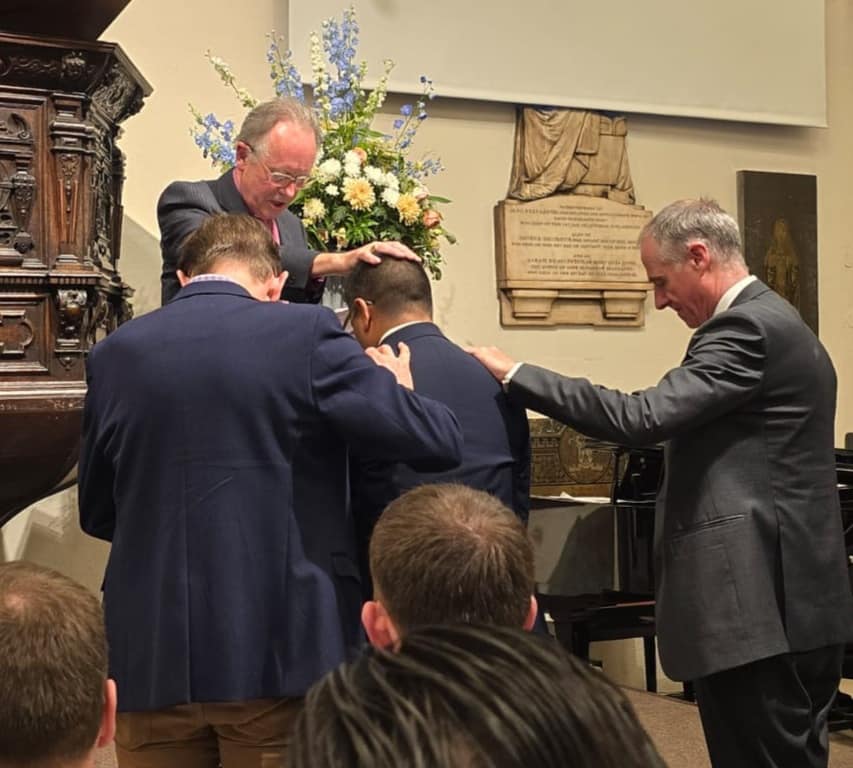
 sharedconversations