I’m back from the first sessions of General Synod in this new quinquennium, and I’m surprised at just how tired I am. In theory, I shouldn’t be. It was a very short meeting: Monday was mostly induction for new members, then Tuesday morning was the ceremonial of the Abbey service and Inauguration, with just Tuesday afternoon and Wednesday until 3 pm for ‘real Synod’. As an existing member not needing induction, I only arrived at the end of Monday, because that afternoon was also when my husband had an important medical meeting as part of his cardiac rehab.
So why am I so tired? Various conversations since Wednesday show that it’s not just me. Is it the realisation that I’m in this, God willing, for another five years? Is it meeting so many new people at once? Or is it something more?
The ceremonial parts
Lots of people clearly enjoyed the Westminster Abbey service on Tuesday. The security was obviously intense because the King would be present, but it wasn’t that which took the time; it was hanging around in the very cold cloisters waiting to process in. And yes we did process this time – in 2021, which I wrote about at the time, we just went in and sat down, because of Covid. I didn’t feel like I was a sacrificial victim this time, mostly because I recognised familiar faces – members of previous Synods and national staff – sitting in the nave and choir. But I didn’t feel very much at all. Maybe the cold had frozen my emotions.
Using the Book of Common Prayer communion service, whatever one’s preferences in liturgy, had one effect which I felt was unfortunate: the omission of the Peace. Bearing in mind that we are being encouraged to move beyond that which divides us, it would have been good to have that opportunity to greet each other.
As I was a long way back in the seating (which is by diocese), I could only see the top of the occasional processional cross, so relied entirely on the screens. My deepest moment of emotional connection was seeing Archbishop Sarah there leading her first such service. I never thought we’d see a woman as Archbishop in my lifetime and I am profoundly grateful for her acceptance of this call. The flip side was that this meant a few members of Synod would not go up to receive communion because they don’t believe women can be priests. We also had a woman preaching at the service: Sister Nathalie Becquart. From her sermon on the reading about Zacchaeus I took these words to heart: ‘Being a member of the Synod does not set us apart, up a tree. It gives us the responsibility of breathing with all Christians and journeying with all humanity as we open our being to the breath of the Holy Spirit.’
All humanity?
All humanity… echoed in Archbishop Sarah’s Presidential Address which included a reminder to ‘welcome everyone – equally and unreservedly’, because ‘every person should be treated with dignity, compassion and respect’. So that must include those who are LGBTQIA+ and who have found lasting loving relationships; relationships which the C of E will not affirm.
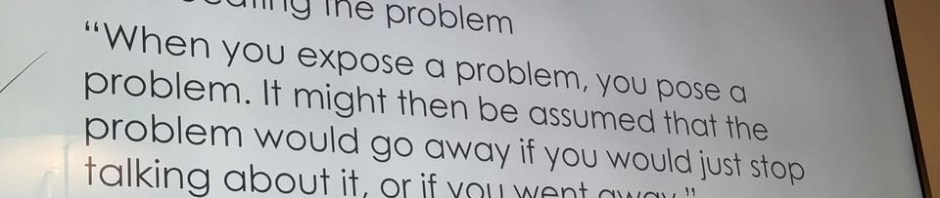
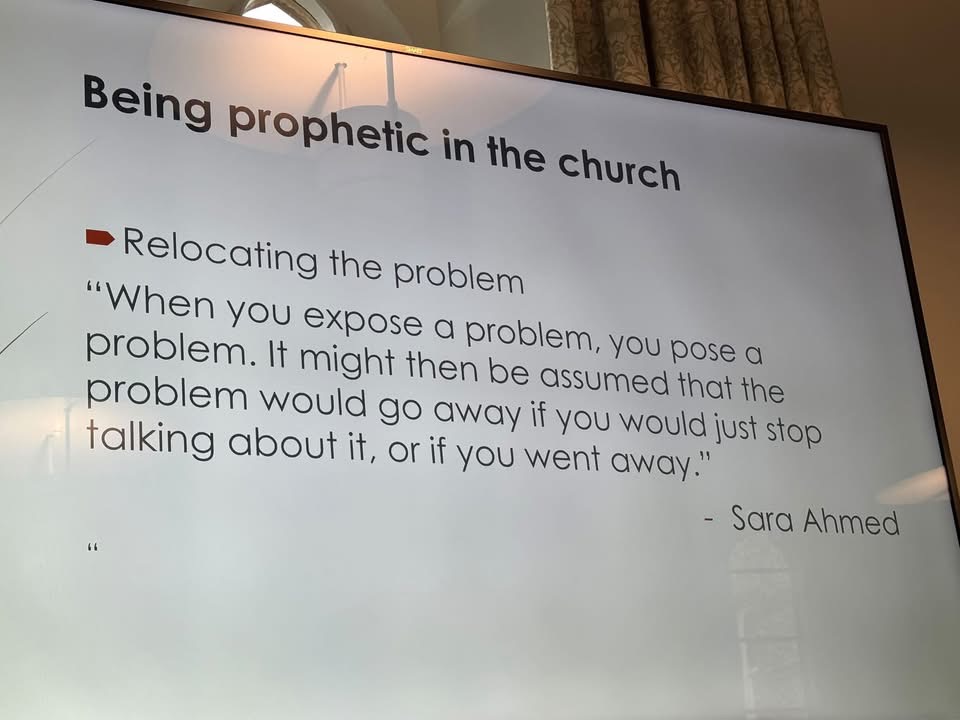
Since the Living in Love and Faith process came to a close, and the new Relationships, Sexuality and Gender Working Group (RSGWG) began to be set up, it has felt to me like we are being expected to ignore our fellow human beings and our deep-seated division about sexuality. If we just don’t mention it, somehow it will go away? That refusal to look at the disagreement seems to have become worse after July, when the Private Member’s Motion in my name, amended to take account of conservatives’ concerns, was passed in the Houses of Clergy and Laity, but failed in the House of Bishops by a mere three votes. Part of the amended motion stated ‘That this Synod a) affirm that all baptised, believing and faithful persons regardless of sexual orientation are full members of the Body of Christ; b) delight in the lives and ministries of LGBTQIA+ people in the Church of England.’ So, do we delight or don’t we? The membership of the RSGWG has not yet been announced – see here – and there were formal Questions to Synod about that. We were told that the membership is nearly complete and that the delay will not affect reporting back to Synod in 2028.
When I read the paper for this meeting’s debate on the implementation of the Clergy Covenant it was with these concerns in mind. So ‘In implementing the Covenant, account has been taken of evidence about clergy experience, including issues of belonging, inclusion, relationships, support and access to pastoral care’. Relationships; so that must include clergy in same-sex civil partnerships and marriages. But, like so much in the C of E, it’s not transparent. The paper mentioned gender, ethnicity, disability and class as ‘each giv[ing] rise to distinctive experiences of marginalisation and opportunity, often rooted in systemic factors beyond the individual’ (paragraph 53). There’s something similar in paragraph 93, naming the same identities and asking that ‘Dioceses should be supported to identify and address structural and cultural barriers affecting particular groups, with a continued focus on belonging, inclusion and equitable access to support.’
But the paper contains no mention of the marginalisation caused by sexuality. It’s as if the love that dares not speak its name has become the love that we dare not mention even where it is clearly relevant. In Questions on Wednesday, I noted that the paper clearly acknowledges the worrying variation within dioceses on how far they have implemented the Covenant and I asked whether there is any guidance provided centrally to help dioceses in understanding the pastoral needs and experiences of marginalisation of clergy in same sex relationships. The answer? Apparently not. But at least I raised it. When it came to the debate on the Covenant, Fr Julian Hollywell drew the distinction between a covenant and an HR strategy and made my point about the absence of mention of LGBTQIA+ people and their families. This absence was acknowledged by Bishop Richard in his summing up of the debate.
Like other people and groups on Synod, I was listening for any sort of acknowledgement of some of my own concerns in the King’s speech at the Inauguration and then in the Archbishop of Canterbury’s Presidential Address. Save the Parish spotted many references to parishes, although that isn’t surprising when parishes are the main low-level structure of the C of E. Safeguarding and the need for full independence was mentioned. And sexuality? Well, there were vague references to division which could just as well (and more likely) be about political division and Reform. The Archbishop used the theme of ‘synod’ meaning walking the Way together, also used back in 2021 as I discussed here. She rightly noted that we live in ‘a wider culture that still, far too often, fails to uphold the dignity, voice and value of everyone, especially women and girls’ but did not name LGBTQIA+ people in this section. She acknowledged that ‘we will have disagreements’ and said that ‘every person should be treated with dignity, compassion and respect’. But nothing specifically on same-sex relationships. This was disappointing. As she said to me afterwards, when I thanked her for her address, words are fine, what matters is how we put them into practice. But there were no words about some of the people who are threatened in our society and who are faithful followers of the Way.
Safeguarding and buildings
Finally, a couple of points about the other items on the agenda. First, the Safeguarding update. I’m still no clearer about why Dame Christine Ryan resigned as independent Executive Chair of the Safeguarding Structures Programme Board, nor about when the review into the case of David Tudor will come out. From the Questions, I have clarified that the National Safeguarding Steering Group are about to decide what to do regarding publishing the promised thematic review of all the existing reports into the various cases of safeguarding failure across our church. And it really doesn’t help that a 232-page document, ‘Amending Safeguarding Concerns and Allegations Code of Practice’ arrived just after Synod ended, because it was only then that the House of Bishops approved it for circulation.
Second, for many, the highlight of the agenda was the Blackburn Diocesan Synod Motion on church buildings, a subject dear to very many people’s hearts. Despite a ‘variation in the order of business’ to claw back an extra half hour for it, this had to be adjourned because it could not be completed in the time available. This was the result of far too many amendments being sent in by Synod members. Even before the end of the opening speech it was clear that we wouldn’t finish unless some people withdrew their amendments and/or those speaking simply cut their speech, resisting the temptation to go into details about their parish roof. Putting in an amendment is a guaranteed way of being called to speak in a debate, so maybe that’s why no amendments were withdrawn apart from one that would only come into play if another one fell. As for cutting one’s speech, there was little sign of that. Some of these amendments were no-brainers anyway but we still had to have a speech introducing each one and we still had to have at least a couple of speeches from the floor. Having run out of time, it’s up to Business Committee to decide when to bring the motion back, but that decision will be taken by the previous version of Business Committee because we are about to elect a new one (and the elections will not be completed until 11 December).
So maybe I am tired for two reasons: we seem to be pretending LGBTQIA+ people don’t exist, and we had a frustrating experience of synodical process. That said, it was good to catch up with people I’d met over the previous five years, and it was encouraging to meet a great range of new members. The disappointingly low number of GMH/UKME members elected needs to be addressed, as last time, with co-options, but just as in 2021 it’s already clear that some members don’t see why we need more people with this experience, or think that they have a better right to speak because they got through the election process – whether that was in the first round or they just scraped in after multiple rounds of the single transferable vote system.
And just when we enter the season of Advent and Christmas, we may need an extra bonus Zoom meeting of Synod to discuss that 232-page document on safeguarding, but then let’s see what February brings.


